
Lead Inspections
Comprehensive visual surveys and dust sampling to identify lead hazards in residential and commercial properties
Abatement and Removal
MDE-certified removal, replacement, or encapsulation using HEPA-filtered vacuum systems and specialized containment.
Final Compliance
Post-abatement cleanup and documentation to ensure your property meets all Maryland Lead Risk Reduction standards
Lead Abatement Services
The Danger of DIY Lead Removal
Microscopic Dust Clouds: Dry scraping creates fine lead dust that is invisible to the eye but easily inhaled. Without HEPA-filtered vacuum systems, this dust settles into carpets and air ducts, creating a long-term toxic environment.
Secondary Contamination: Without professional-grade containment (6-mil plastic sheeting and air scrubbers), lead particles travel to “clean” areas of the property, often resulting in expensive failed clearance tests.
Ineffective Cleanup: Standard household vacuums actually blow microscopic lead dust back out into the air. Professional abatement requires specialized HEPA vacuums and wet-cleaning methods to truly remove the hazard.
Legal & Health Liability: Improper removal can lead to MDE violations, heavy fines, and permanent health risks for occupants—especially children. Professional abatement ensures you are protected legally and ethically.
The Maryland Compliance Checklist
- Decide on Interim controls vs. Full Abatement options
- Full MDE and EPA certified abatement
- Dust wipe clearance testing coordination OR if you have a violation (Notice of Defect) a Modified Risk Reduction
- Supervisors Statement of Work (SSW) submitted to the MDE (Violations Only)
I have a Notice of Defect: What’s my next step
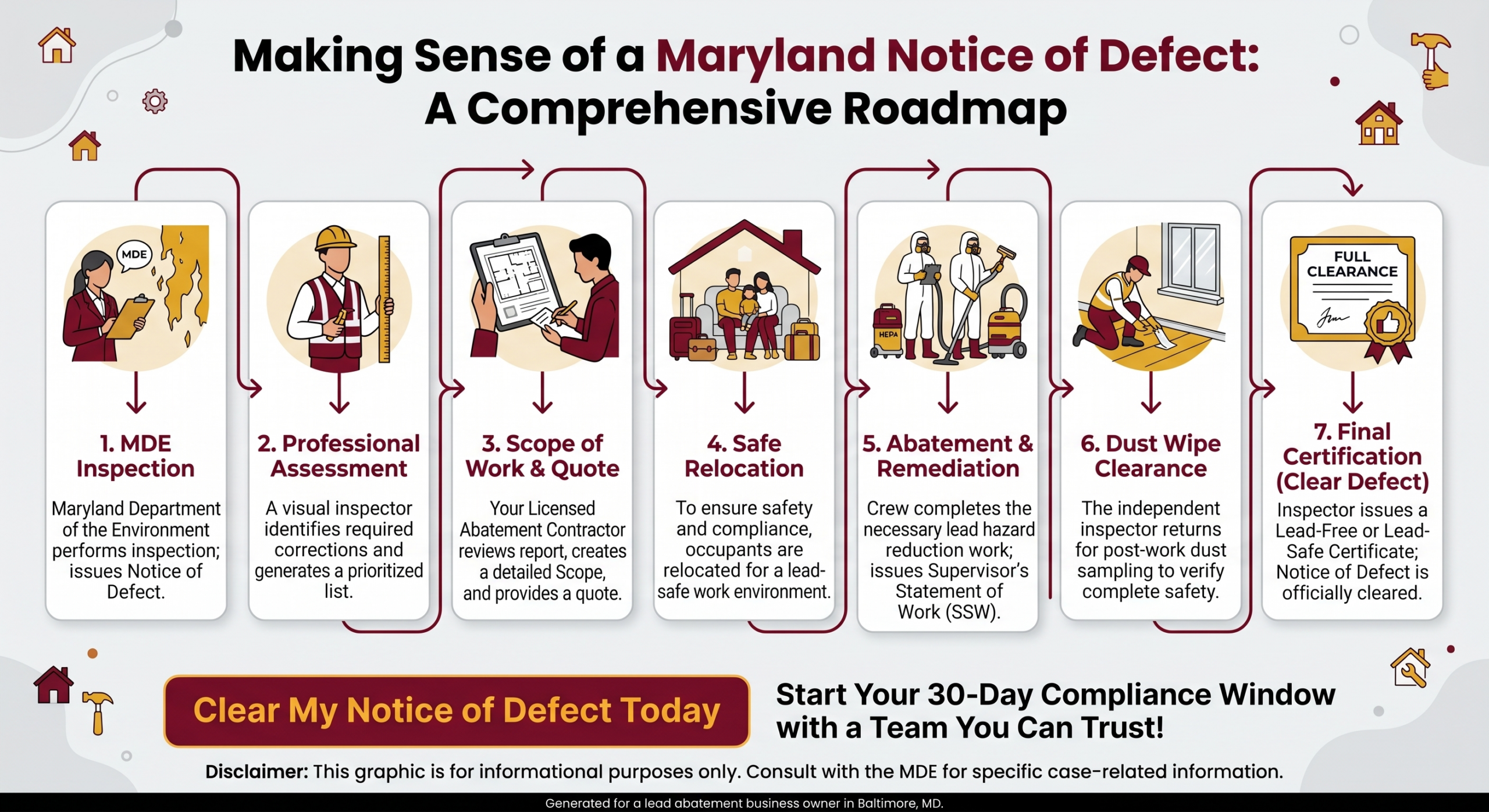
The 7-Step Maryland Notice of Defect Roadmap
If you’ve received a Notice of Defect, the clock is ticking and you have 30 Days to get back in compliance. Here is the legally required process to clear the defect and protect your property:
- MDE Inspection: The Maryland Department of the Environment identifies lead hazards and issues the official Notice of Defect.
- Professional Assessment: A licensed 3rd-party Visual inspector Risk Assessor performs a visual inspection to create your required correction list.
- Abatement Quote: As your Licensed Abatement Contractor, we review the report to provide a specific Scope of Work and quote.
- Safe Relocation: For safety and compliance, occupants must be temporarily relocated during the work phase.
- Remediation & SSW: Our team completes the lead-safe repairs and issues the Supervisor’s Statement of Work (SSW).
- Dust Wipe Sampling: An independent inspector returns to verify safety via post-abatement dust sampling and issued a Modified Risk Reduction Certificate.
- Final Clearance: Your Notice of Defect is officially cleared once the inspector issues the passing Modified Risk Reduction certificate.
Protecting Your Family: Homeowner Lead Solutions
Planning a Renovation? If your home was built before 1978, sanding or painting can release dangerous lead dust. We provide safe, “lead-aware” prep work to ensure your remodel doesn’t compromise your family’s health.
Buying an Older Home: Before you move in, let us perform a professional assessment. We help you identify potential lead hazards in windows, doors, and exterior trim so you can address them before the kids arrive.
Total Peace of Mind: We don’t just “cover up” lead; we use specialized HEPA-filtration and wet-cleaning techniques to leave your home cleaner than we found it.
Child Safety First: Lead exposure is most dangerous for pregnant women and children under 7. Our abatement methods are designed to meet the highest safety standards to protect the most vulnerable members of your household.